Reach us at: (417) 459-4579
Do I Need Upper Control Arms With a Lift Kit? When Factory Arms Aren’t Enough
By Dustan Stroud, owner of Missouri Off-Road in Branson, MO
Last updated November 28, 2026
On a 2-inch leveling kit, most trucks are fine on the factory upper control arms. At 2.5 inches, you usually don’t have to have new arms either, but that’s pretty much the limit. Once you get into the 3 to 3.5 inch range, where the kit isn’t using big drop-down crossmembers or new steering knuckles, those factory upper ball joints run out of angle and wear out faster, which is why those kits come with new arms. Dustan’s take: we only sell 3-inch F-150 kits with new arms, because 3 inches on factory arms damages ball joints and spindles. On the larger 4-inch and 6-inch kits that have crossmembers and redesigned knuckles, you keep the factory upper arms.
Quick answer
- What an upper control arm does: it’s the upper link that holds the front knuckle and houses the upper ball joint. It sets camber and caster as the wheel moves.
- 2-inch level: most half-tons keep the factory arms.
- 2.5 inches: you usually don’t have to have new arms, but that’s pretty much the limit.
- About 3 to 3.5 inches: plan on new upper control arms. That’s the range they’re generally designed for, usually on kits that aren’t using big drop-down crossmembers or new steering knuckles.
- 4-inch and 6-inch kits with crossmembers and redesigned knuckles: factory arms are fine. New upper arms aren’t needed.
- F-150, 3 inches: we only sell those kits with new arms.
- Super Duty 4×4: no upper control arms. It’s a solid front axle, so what matters is a track bar that keeps the axle centered.
- After you install them: get an alignment, and check and grease the ball joints every 3,000 miles. I’ve run Rough Country arms over 100,000 miles with just regular greasing.
- Not sure? Call or text us at 417-459-4579 and we’ll tell you what your truck needs.
I’ve been doing this a little over 26 years, and “do I need new upper control arms?” is one of the first questions I get once someone has picked a leveling kit or a lift kit. It came up again this week in the truck owner groups. This is the truck-by-truck answer, from what we sell and install in Branson.
What does an upper control arm actually do?
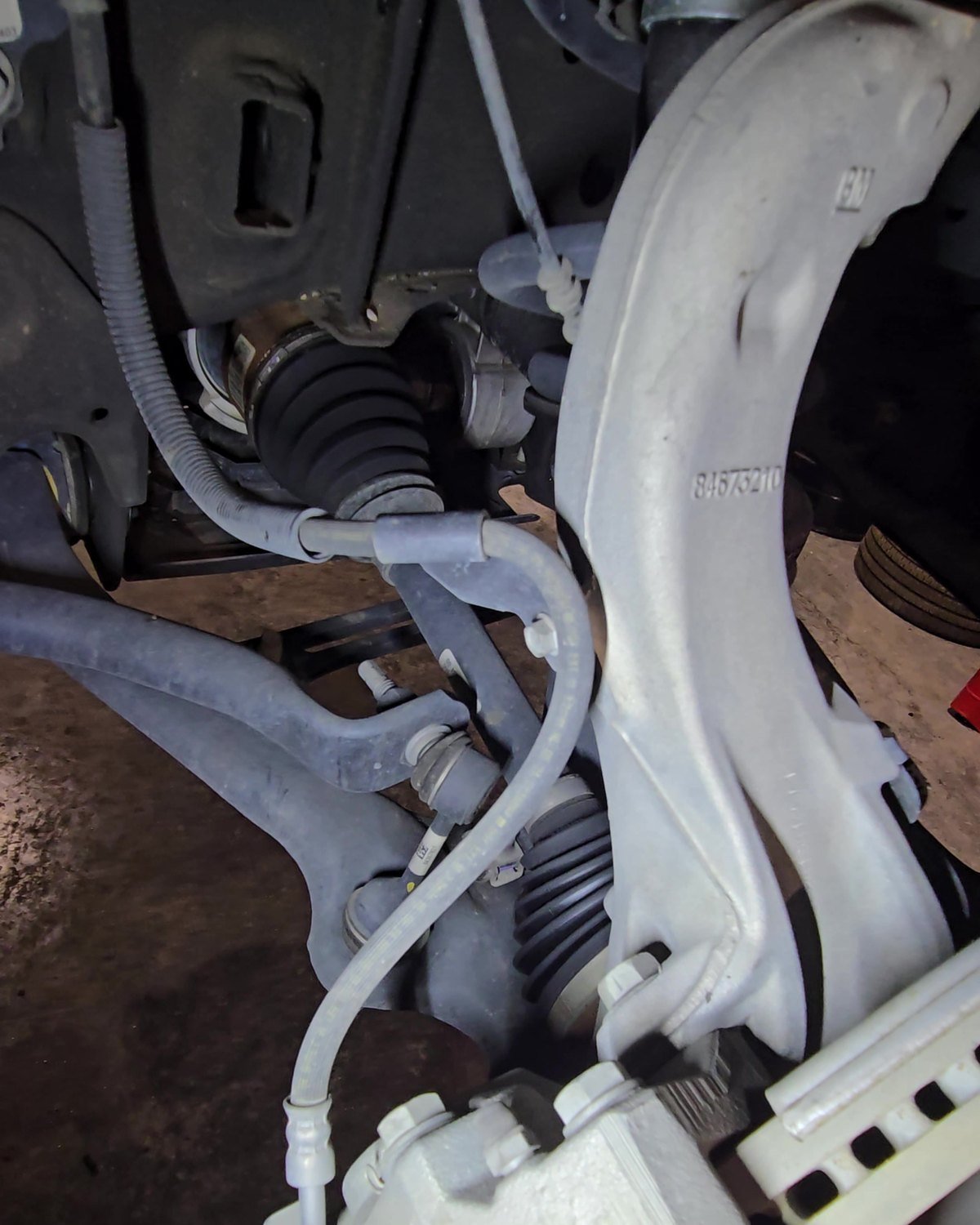
An upper control arm is the upper link in the front suspension. One end bolts to the frame, and the other end holds the upper ball joint, which is what connects that arm to the steering knuckle. As the wheel travels up and down, that arm is what keeps the knuckle located and what sets your camber and caster.
That’s a geometry part, not a shock. It doesn’t make the truck ride softer or harsher by itself. When the ball joint is in a good working angle, the truck aligns, the tire wears evenly, and the joint lasts. When it isn’t, you feel it later: a clunk, a wander, an alignment that won’t come into spec, or a ball joint that gives up early.
Why does a lift put more angle on the factory ball joint?
A factory upper arm and ball joint are built around stock ride height. When you raise the front of the truck, the lower arm swings down, the knuckle sits lower relative to the frame, and the upper ball joint has to work at a steeper angle than it did at stock. A little of that is fine. A lot of it is not.
On a 2-inch level, most modern half-tons stay close enough to that factory range. At 2.5 inches, you usually still don’t have to have new arms, but that’s pretty much the limit. Go to about 3 inches, and the factory upper ball joint is often past the angle it can live with. That’s when you see accelerated wear, and in the worst cases, damage to the ball joint and the spindle. One Ram owner who ran 3-inch spacers on factory arms said those arms were nearly touching the coil spring at full droop. That’s why kits in that 3 to 3.5 inch range come with new arms: the new arm repositions the ball joint so it can work at the new height, and it usually gives us more caster adjustment so the alignment will actually come into spec.
New upper control arms are generally designed for 2.5 to 4 inches of lift, usually falling in that 3 to 3.5 inch range, where the kit isn’t using large drop-down crossmembers or new steering knuckles. On the larger 4-inch and 6-inch kits that have those crossmembers and redesigned knuckles, you use the factory upper arms with no issues.
| Front height | Factory upper arms? | Why |
|---|---|---|
| Stock | Yes | That’s what they were built for |
| About 1.5–2″ level | Usually yes | Most half-tons stay in a safe ball-joint angle |
| About 2.5″ | Usually yes | You usually don’t have to have new arms, but that’s pretty much the limit |
| About 3–3.5″ (no big drop-down crossmember or new knuckle) | New arms | Factory ball joints run out of angle; this is the line we won’t cross on an F-150 |
| 4″ and 6″ kits with crossmembers and redesigned knuckles | Yes, factory arms | The crossmembers and new knuckles handle the geometry, so new upper arms aren’t needed |
| Super Duty 4×4 (solid axle) | No upper arms | Track bar and axle centering matter instead |
If you’re still deciding between a level and a lift, start with our leveling kit vs. lift kit guide. If the question is what tire that height will actually fit, use the lift-for-tire-size chart.
Do you need new upper control arms with a leveling kit?
Usually not on a 2-inch level. That’s the honest answer, and it’s the one I give most days in the shop. A 2-inch aluminum leveling kit for a 2014–2027 F-150 is a front-only spacer job. It keeps the factory struts and the factory upper arms. The same is true of most 2-inch levels on a Silverado, Sierra or Ram 1500. At 2.5 inches, you usually don’t have to have new arms either, but that’s pretty much the limit.
A spacer kit we sell and install, with the correct parts, rides almost like stock. The arms aren’t what changes that. The struts are. If the truck has over about 75,000 miles, or the struts are already tired, skip the spacer and go to new leveling struts or coilovers. Don’t tear the front end down to bolt a spacer onto worn struts, then do it all again later. That 75,000-mile rule lives in the leveling vs. lift guide. It isn’t an upper-arm problem.
Some owners still add aftermarket arms to a level, especially with leveling struts or coilovers, because they want more droop travel and more room to set caster. That’s a valid upgrade, not a requirement on a 2-inch kit. If the truck already wanders, the alignment won’t come in, or the upper ball joints are worn, new arms can be the right call even at a smaller height. More on F-150 kits is in our F-150 leveling kit guide.
Do you need upper control arms with a 3-inch lift?
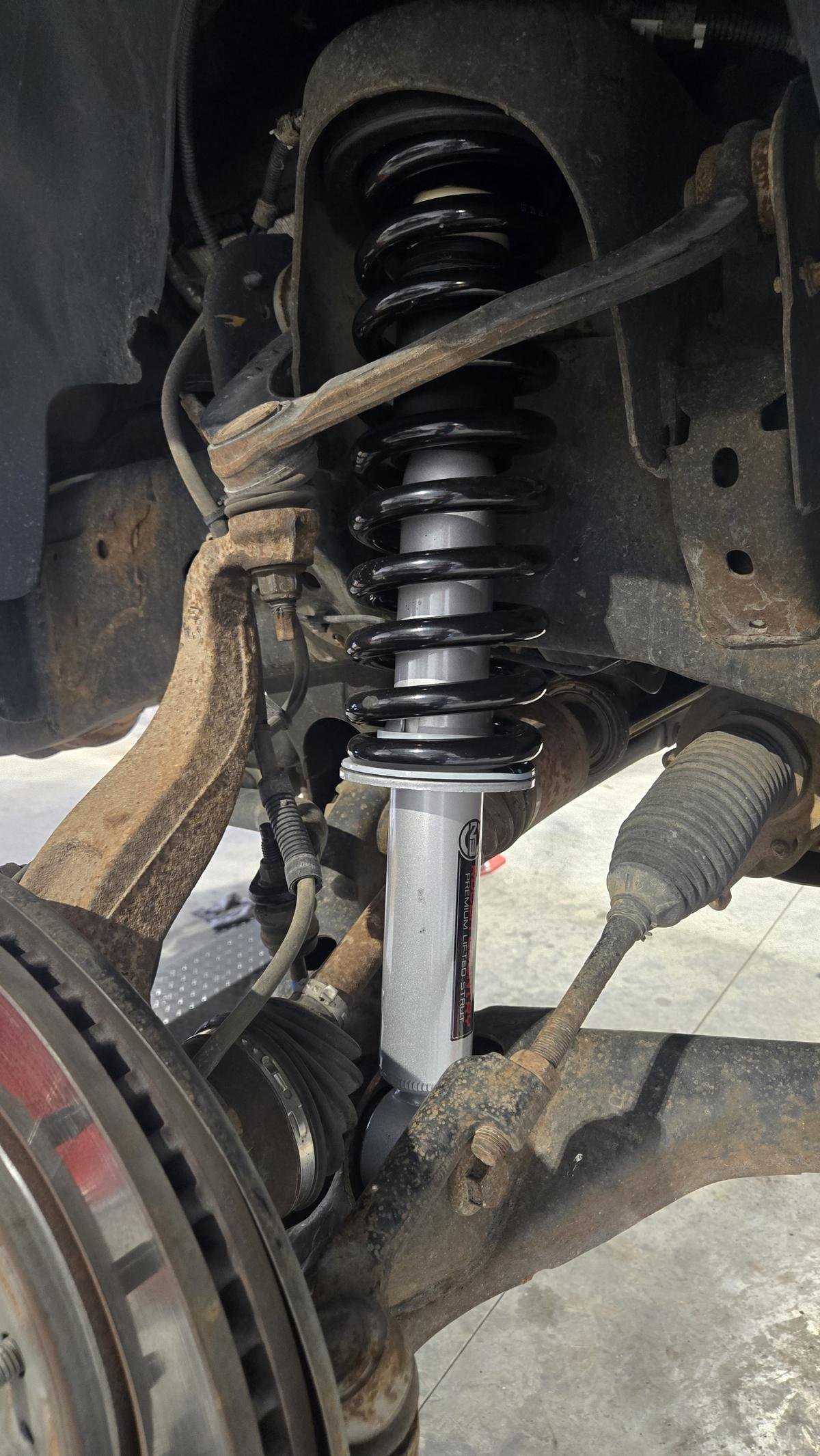
In that 3 to 3.5 inch range, yes. New upper control arms are generally designed for 2.5 to 4 inches of lift, and they usually fall in the 3 to 3.5 inch kits that aren’t using large drop-down crossmembers or new steering knuckles. We sell lift kits that already include them, and we also sell the arms by themselves when they fit the height you already have. On the larger 4-inch and 6-inch kits that have those crossmembers and redesigned knuckles, you keep the factory upper arms.
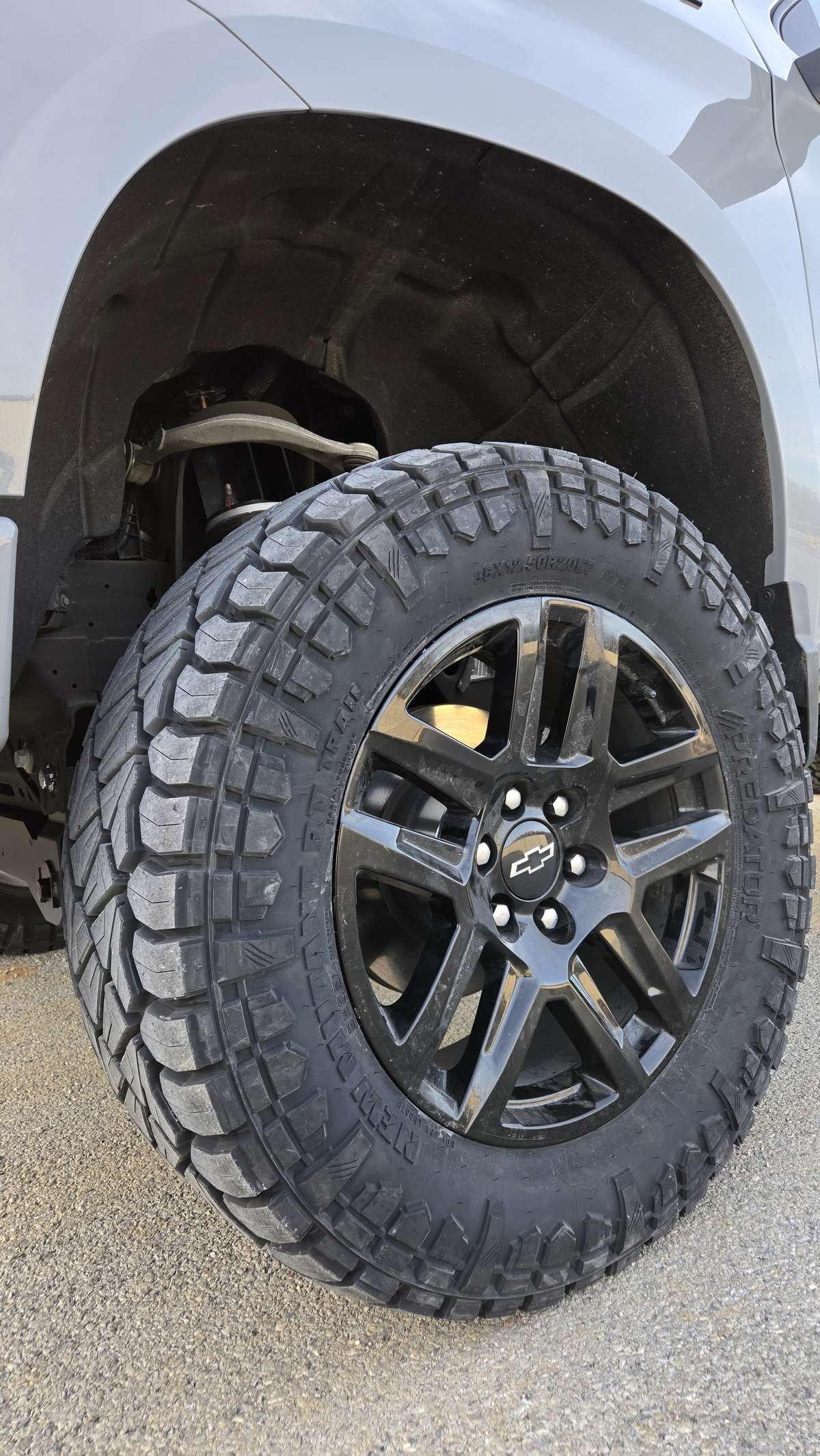
Dustan’s take, F-150: we only sell 3-inch F-150 kits with new arms, because 3 inches on factory arms damages ball joints and spindles. The 3-inch forged upper control arm kit for the 2021–2027 F-150 4WD uses front spacers, new forged aluminum arms and rear blocks. Rough Country rates it for up to 34-inch tires, with no cutting or drilling, and it does not fit Tremor models. The arms are listed through 2027, so that kit is good for 2027 models too. There’s a version with M1 coilovers and shocks if you want new struts in the deal, and a 4-inch no-cut kit with forged arms and M1 struts for 2021–2027 if you want more height without going to a big crossmember kit. Dustan’s take on that 3-inch spacer kit: a 35-inch tire on a 9-inch-wide wheel holds without issue. On a 10-inch or wider wheel, you can run into the crash bars, and we do not advocate taking those off.
If you already have a 3-inch setup and just need the arms, we list forged upper control arms for the 2021–2027 F-150, 2WD and 4WD, designed for a 3-inch lift in our suspension parts.
Silverado and Sierra 1500. On 2019–2024 trucks, the 3.5-inch lift with M1 struts includes forged upper arms. For 2007–2018 1500 trucks and SUVs at 2.5 to 3.5 inches, we also list standalone forged upper control arms. Those arms only fit 2.5–3.5 inches of lift. They do not fit 5- or 6-inch kits, or Rough Country’s 3.5-inch lifted-knuckle kit.
Ram 1500 (2019+, non-air). The 3.5-inch M1 lift is the kit we point people to when they want height and new arms in one box. A 2-inch level on these trucks usually stays on the factory arms.
Tacoma and 4Runner. The 3.5-inch Tacoma lift with upper control arms and M1 struts, 2005–2023 and the 3-inch 4Runner kit with upper control arms, rear coils and M1 struts, 2010–2024 both include new arms. A 2-inch Tacoma level is still usually a factory-arm job; 35s on a 3rd-gen Tacoma are a bigger project, which is covered in the tire-size chart.
HD trucks. A 3-inch UCA kit for 2020–2026 Silverado and Sierra 2500HD and 3500HD includes the arms. Matching a half-ton or 3/4-ton lift to how you actually drive is in our half-ton and 3/4-ton lift kit guide.
We install Rough Country every week, and we also install Carli, Cognito, ICON and other brands daily, even though those aren’t listed on the site yet. If you already know you want one of those, call or text us at 417-459-4579 and we’ll get you taken care of.
What are the signs your factory upper arms are maxed out?
You don’t have to guess. The truck will usually tell you.
Dustan’s take: the most common sign is a bad angle in the ball joint, or the upper control arms already hitting a bump stop, or about to hit their bump stop limit. If someone has been running spacers that are too big for a while, you’ll also get premature wear on the ball joint. That shows up as visible slack when you jack that tire up off the ground and shake it.
Other things I watch for:
- The alignment won’t come into spec, especially caster. If the tech is out of adjustment and still can’t get the numbers, the arm is the limiting part.
- A clunk or pop over bumps, or at full droop when you turn the wheel.
- Uneven tire wear on the inside or outside edge, after you’ve already had an alignment.
- Wander or loose steering that didn’t used to be there, especially after a recent level or lift.
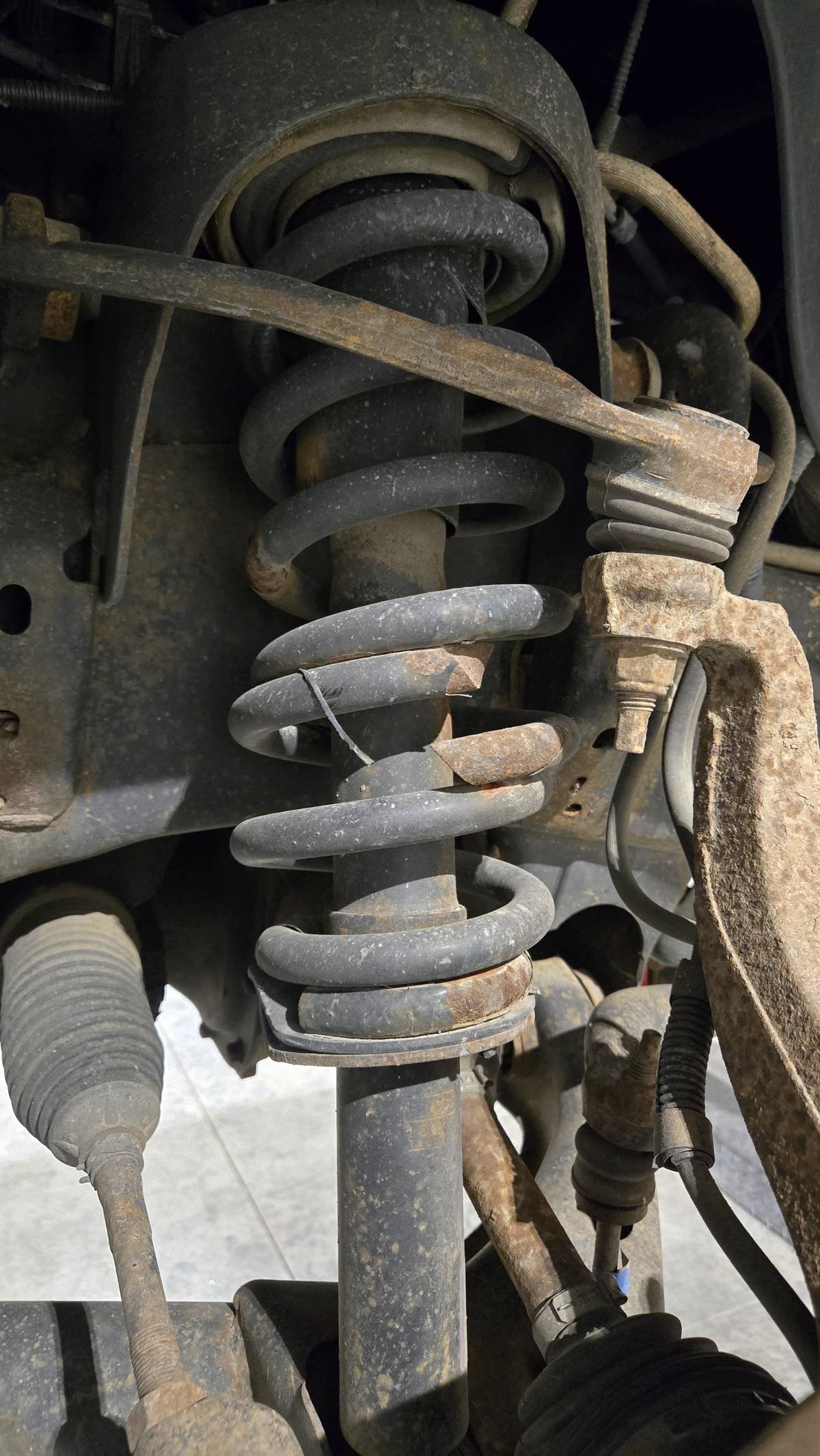
A worn factory strut can feel like an arm problem, and the two show up together on high-mileage trucks. This F-150 had over 200,000 miles, shocks that had never been changed, and a broken coil spring. We put a new loaded leveling strut in it and left the factory arms, because it was still a 2-inch level. At 3 inches, we would have upgraded the arms too.
What’s different about aftermarket upper control arms?
The job of an aftermarket arm is to put the ball joint back in a healthy working angle at the new height, and to give us more room to set the alignment. The good ones also last, if you maintain them.
On the Rough Country forged arms we sell, that means a one-piece forged aluminum arm with no welded seam in the middle, an optimized ball-joint angle, greasable POM ball joints with a larger ball than a typical factory joint, and factory-style rubber bushings. Those bushings are why they ride and sound like a truck, not like a race car. The 2007–2018 Chevy and GMC 1500 arms also include a cap to keep dirt and water off the joint.
Dustan’s take: I’ve run Rough Country arms over 100,000 miles with just regular greasing. Check and grease the ball joints every 3,000 miles. Rough Country’s sheet says to grease them before you use the truck and to check them every 3,000 miles. I want them greased at that interval, not just looked at.
My honest take on the brand as a whole is in Are Rough Country suspension kits any good?. Aftermarket arms don’t replace a worn strut, and they don’t fix a CV angle on a tall 4WD lift by themselves. If the kit needs a diff drop or a crossmember, that’s a different part, covered in the leveling vs. lift guide.
Can you add upper control arms later, or should they come with the kit?
If you’re buying a kit in that 3 to 3.5 inch range, get the one that already includes the arms. You’re going to be in the front end anyway, and the kit is designed around those arms. If you’re going to a larger 4-inch or 6-inch kit with crossmembers and redesigned knuckles, you don’t need to add aftermarket upper arms.
If you already have a 2-inch level and you’re happy, you don’t need to add arms just because you read a forum thread.
If someone already has a 3-inch spacer on factory arms, it’s a good idea to upgrade to forged arms. If they have a quality spacer and their strut is still in good shape, they don’t have to change the spacer. They can just upgrade the control arms. On a 2021–2027 F-150, the standalone forged arms match a 3-inch lift. On a 2007–2018 Chevy or GMC 1500 at 2.5 to 3.5 inches, use the standalone arms I linked above, as long as you aren’t on a 5- or 6-inch kit or a lifted knuckle. For other years and makes, call or text us at 417-459-4579 and we’ll match the arm to the kit you actually have.
What about Super Duty and other solid-axle trucks?
A 4×4 F-250 or F-350 has a solid front axle, so there are no upper control arms or CV angles to fight. What matters is keeping the axle centered. That’s why Rough Country’s 2-inch Super Duty leveling kit for 2017+ comes with a track bar bracket. It doesn’t fit Tremor models, and it doesn’t fully level a 2017.
Jeep Wranglers and Gladiators use control arms in a four-link setup, not a single upper A-arm like a half-ton truck. If you’re lifting a JL, JT or JK, call or text us at 417-459-4579 and we’ll go through the kit for your year, including how much lift you need for 35s or 37s.
Frequently asked questions
Do I need upper control arms with a 2-inch or 2.5-inch leveling kit?
Usually not. Most modern half-tons run fine on the factory upper arms at about 2 inches. At 2.5 inches, you usually don’t have to have new arms either, but that’s pretty much the limit. The arms are not what makes a spacer ride like stock. Healthy struts and a correct install are.
Do I need upper control arms with a 3-inch lift?
Yes. At about 3 inches, the factory upper ball joint is past a healthy working angle and wears faster. New upper arms are generally designed for 2.5 to 4 inches of lift, usually in that 3 to 3.5 inch range. We only sell 3-inch F-150 kits with new arms, because 3 inches on factory arms damages ball joints and spindles. If you already have a 3-inch spacer on factory arms, it’s a good idea to upgrade to forged arms. If it’s a quality spacer and the strut is still in good shape, you don’t have to change the spacer. You can just upgrade the arms.
Do I need new upper control arms with a 4-inch or 6-inch lift?
Not on the larger 4-inch and 6-inch kits that have drop-down crossmembers and redesigned steering knuckles. Those kits let you keep the factory upper arms with no issues. New upper arms aren’t needed there. They’re for the mid-height kits, usually 3 to 3.5 inches, where you aren’t using those big crossmembers or new knuckles.
Will new upper control arms make my truck ride better?
Not by themselves. An upper control arm is a geometry part. It puts the ball joint in a better position and gives us more alignment range. Ride comes from the springs and shocks. If a spacer on healthy struts feels almost like stock, that’s the struts and the spring, not the arms.
How often should I grease upper control arm ball joints?
Check and grease them every 3,000 miles. Do it at install too. I’ve run Rough Country arms over 100,000 miles with just regular greasing. Skip that, and even a good arm can wear out early.
Can I use factory wheels with a lift kit that includes upper control arms?
Often yes, with the right tire. Rough Country’s 3-inch F-150 forged-arm kit is rated for up to 34-inch tires, and the company lists a 0.25-inch wheel spacer if you want to keep the factory wheels. Dustan’s take: a 35-inch tire on a 9-inch-wide wheel holds on that kit without issue. On a 10-inch or wider wheel, plan on clearance issues at the crash bars. For the exact tire by truck, use the lift-for-tire-size chart.
Do I need an alignment after installing upper control arms?
Yes. New arms change camber and caster, and one of the reasons to install them is so we can actually get those numbers into spec. We do alignments in house at the shop in Branson, and we also check the radar and cameras here. A leveling kit is almost never an issue for those sensors. Larger kits can need dealer help to get the driver-assist systems right.
What if I have a Super Duty? Do I need upper control arms?
No. A 4×4 F-250 or F-350 uses a solid front axle, so there are no upper control arms. You want a kit that addresses the track bar and keeps the axle centered, like the 2-inch Super Duty leveling kit with a track bar bracket. It does not fit Tremor models.
Not sure if your truck needs new arms?
Tell us your truck, the kit you have or want, and how you drive it. Not sure it fits? Call or text us at 417-459-4579 and we’ll double-check your parts against your truck. We install lift and leveling kits in Branson, and we install everything we sell. Plan to leave the truck all day for a leveling kit and a few days for a full lift. That’s always discussed and handled case by case for the specific job. We handle the alignment here, and we check the radar and cameras in house.
If you’re near Branson, we’ll do the work at the shop at 320 Stonetree Dr. You can also order online and choose free pickup in Branson at checkout. Wait for our call or text before you come in. Pickup is Monday through Friday, 8am–5pm. We’re Branson’s dedicated truck accessory and off-road shop.
Pay over time at checkout with Affirm (orders $50 and up) or PayPal Pay Later.
Shop leveling kits · lift kits · all suspension